The Spanish Golden Era
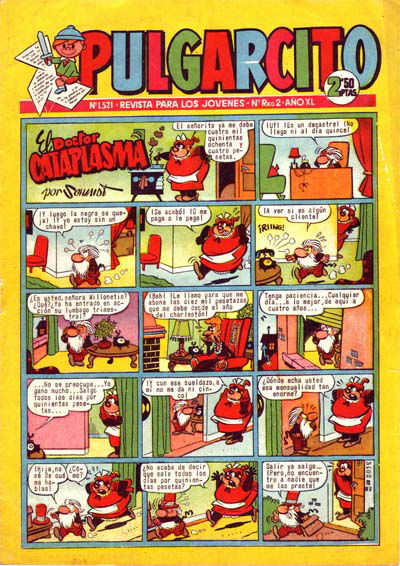
Echevarría's documented career parallels the boom in adult comics in Spain, beginning with the early experimentation and expansion, and ending with the industry's downturn and the end of the golden era of Spanish comics.1
The Spanish comics market was historically focused on children's adventure and humor. Comics were juvenile literature and content tightly controlled by The Comisión de Información y Publicaciones Infantiles y Juveniles ("Commission for children and young people's information and publications", 1962-1978). Even superheroes were banned in 1964.2 Repression and censorship under Franco's regime drove many editors and writers into exile.
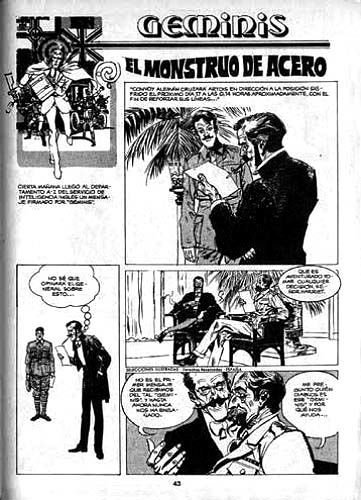
During this period, Editorial Bruguera established an iconic form of juvenile comics. The company carved out a niche by accommodating the restrictions and it grew to dominate the local market. By 1960, agencies such as Selecciones Ilustradas had sprung up to circumvent the constraints by accessing foreign markets, where the pay was better and the work plentiful. However, Spanish artists remained mere employees, without creative control or ownership.
In 1967, censorship laws were relaxed for distinctively adult publications,3 and publishers quickly exploited the opportunity to release adult-oriented comics in formats physically different to children's publications. Among the first publications to test the new freedom was Dossier negro (Ibero Mundial de Ediciones, 1968), which published Echevarria earliest known comic work.
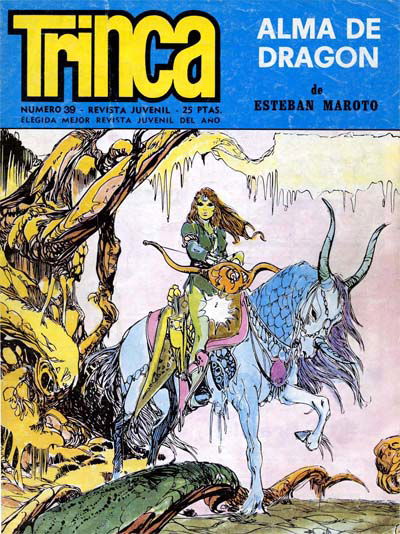
Soon, there was a flood of major new publications, including Gran Pulgarcito (Editorial Bruguera, 1969), Trinca (Ediciones Doncel, 1970) and Dracula (Buru Lan de Ediciones, 1971). Following Franco's death in 1975, the industry expanded further, risking the publication of social and political satire and releasing onto the market a flood of horror (eg, Creepy in 1979), erotic (eg, Metal Hurlant in 1981) and underground comics.
While an expanding economy drove some publishers to exploit the new political environment for profit, many publications espoused high aspirations for local content that pushed artistic boundaries. As with Font, Spanish artists were inspired to write their own scripts and to take on the role of publisher, seeking complete artistic control of their work.4
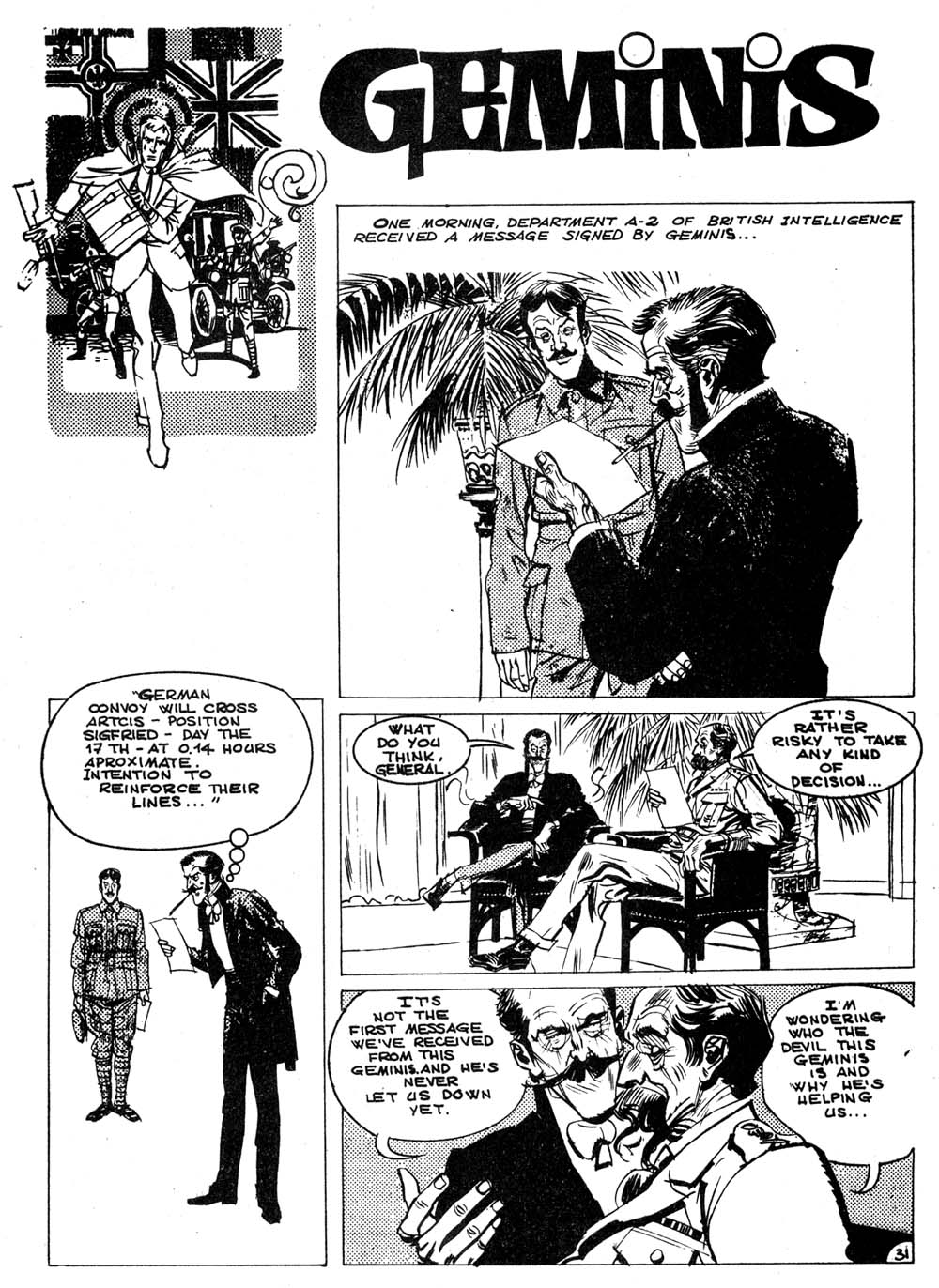
In the mid 1970s, Font played a leading role in efforts to establsh a union to defend the interests of comics professionals and, with Carlos Giménez, Victor Mora and Adolfo Usero, founded the magazine La Calle in 1978.
Acceptance of comics as a respectable art form grew, with Salón del Cómic de Barcelona (Barcelona Comic Fair) established in 1980 and a comprehensive history (Historia de los Comics) serialised in 1982.5
But despite the innovation and creativity, the Spanish comics industry was in a bubble that was about to burst.