Font's own style
In 1975, Font moved to Paris, which he described as the "magnet for many of us in those days, whether cartoonist, painter, singer, actor or novelist—or simply those who wanted to breathe freedom in a democratic country."1
He acknowledges being influenced at the time by Michelangelo Antonioni (1912-2007)2 and French "nouvelle vague" filmmakers3—who advocated freedom of expression and technique in films.4 This period sees his artistic maturity emerge, as the former Brecciaesque tone gives way to a more fluid and cartoony, but detailed, style that proved popular in Spain.
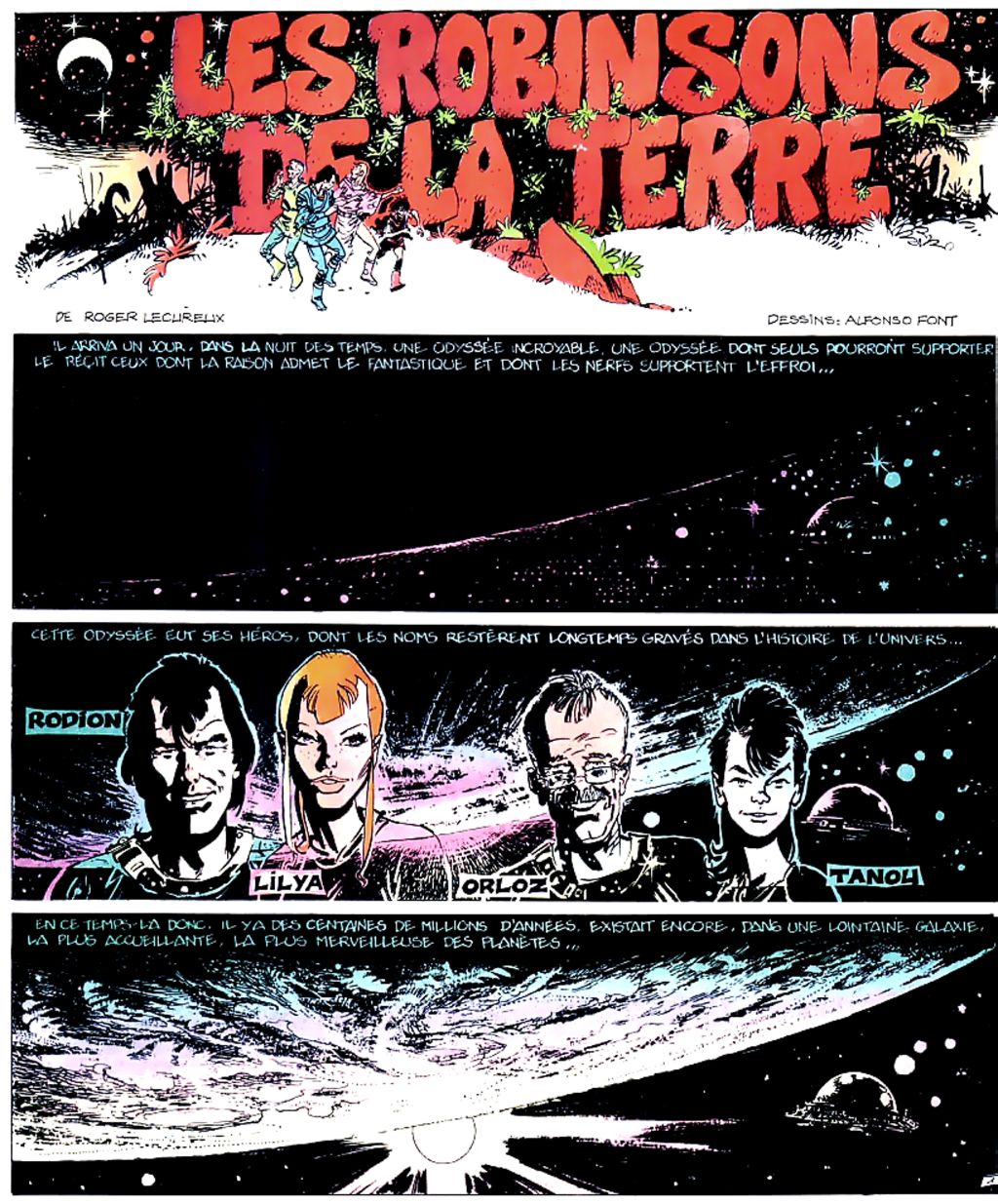
He collaborated with French comic magazine Pif Gadget,5 including "Les Dossiers Mystère" with scripter B. Solet and Spanish artists Carlos Giménez (b.1941) (who also worked on Gringo) and Adolfo Usero (b.1941) in 1978; and popular space opera Les Robinsons de la Terre with Roger Lécureux (b.1925) in 1979-82, a series reportedly cut short due to disagreement between the writer and artist.6
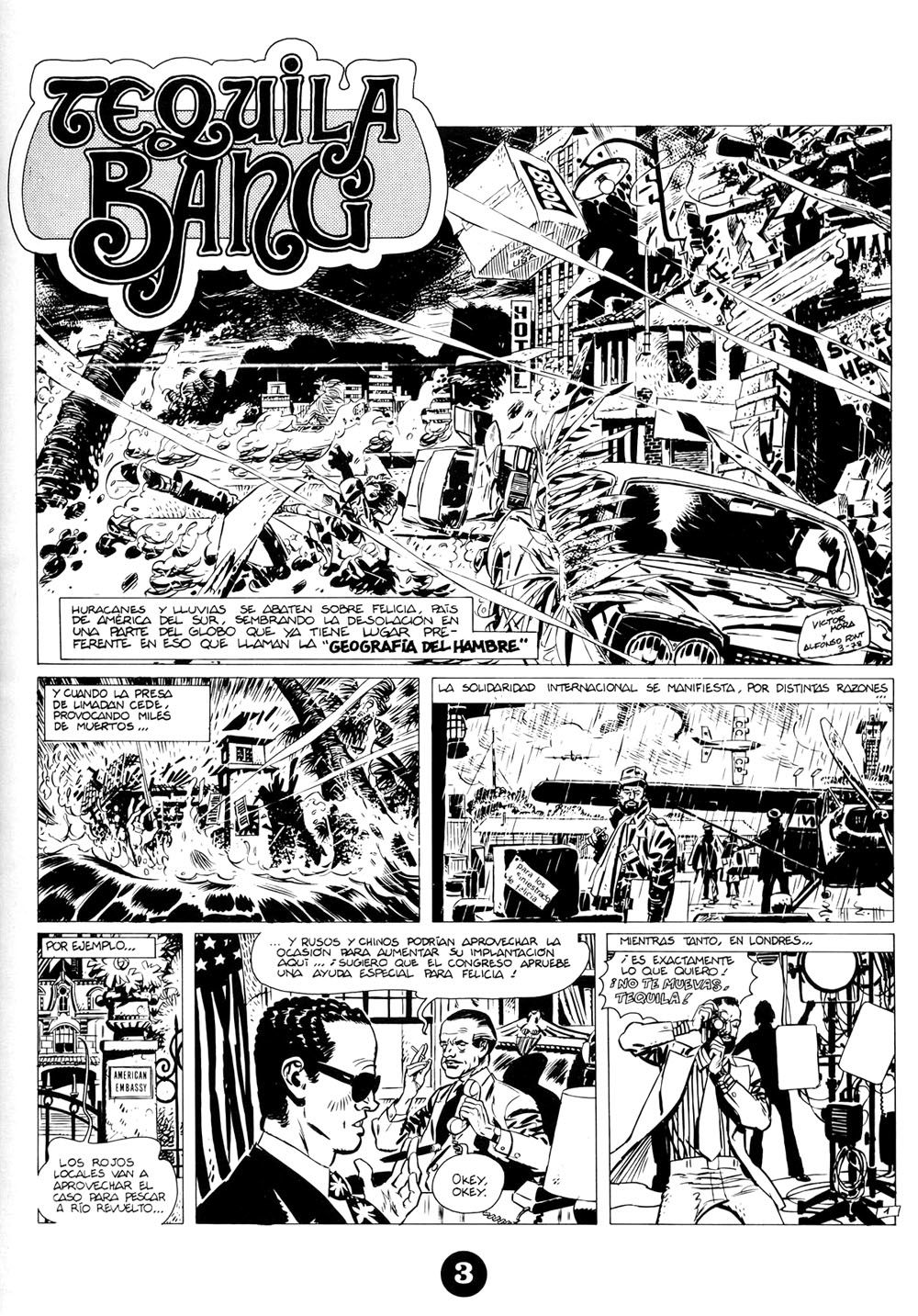
Font drew the one-off story "Les Compagnons d'Atlantis" for Super-As in 1980, on a script by Victor Mora (Sunday) in 1980. He later worked with Mora again after returning to Spain around 1984, first on Sylvestre, a series of thee-page humourous strips, and then the popular Tequila Bang,7 the story of an uninhibited revolutionary woman.
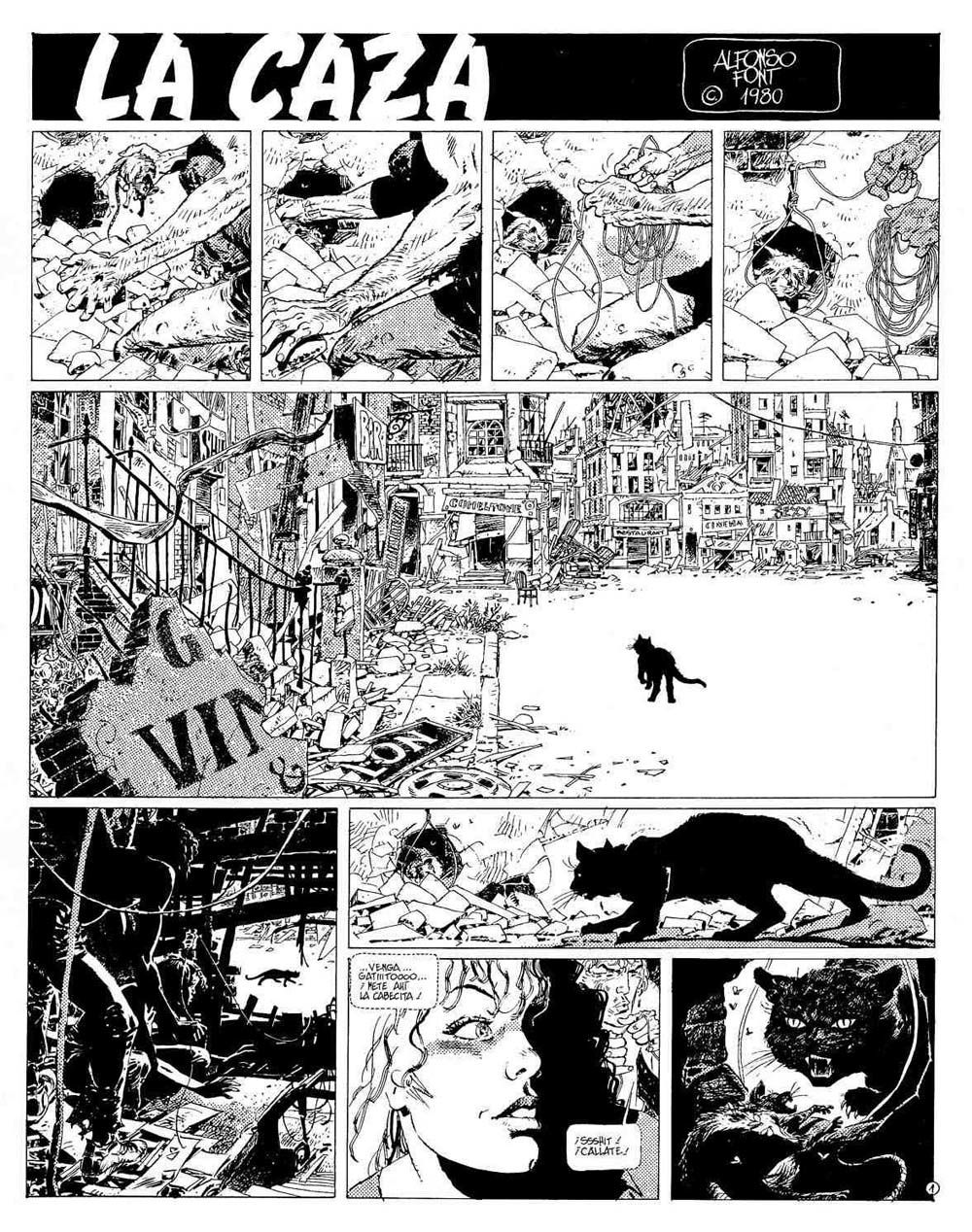
From 1980, Font began writing as well as drawing, and established him internationally. This work ranges from Rohner (Norma, 1989), the story of a 19th centry sailor who is a friend of Robert Louis Stevenson; to Bri d'Alban (Cimoc, 1995) about the crusade against the Cathar heretics of Occitan; Historias Negras (Toutain Editor, 1979) in the Spanish Creepy; and the humourous strips En busca del Cimoc perdido (Cimoc, 1982).
His most famous self-authored works are science fiction series: Cuentos de un Futuro Imperfecto,8 short stories about dystopian futures; Clarke & Kubrick,9 about two low-life characters; and El Prisionero de las Estrellas,10 a blend of The Prisoner and Mad Max—and a rare story published in English in 2008.
![Prisoner of the Stars [nn] (June 2008)](https://images.ausreprints.net/page/8203.jpg "Prisoner of the Stars [nn] (June 2008)")
In 1993 Font received the Grand Prize of Salón del Cómic de Barcelona and the prestigious "Yellow Kid" award in 1996. Following the decline of the Spanish comic market in the 1990s, he has worked in France and Italy, notably drawing Mauro Boselli's scripts for the iconic Italian western series Tex.11