Space Ace v. Johnny Galaxia
While Beá and Navarro's Johnny Galaxia was sold quickly to the UK market, the publisher, Atlas Publishing and Distributing Co., promptly changed the name to Space Ace.
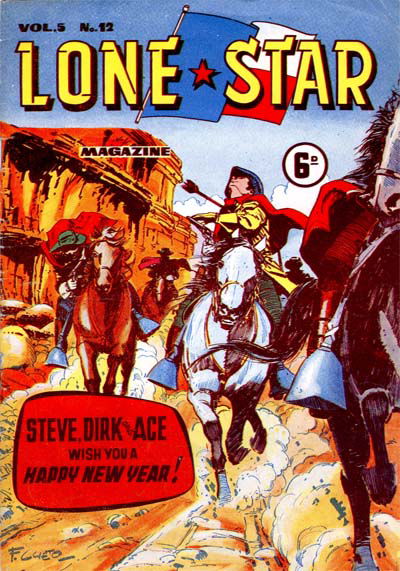
This capitalised on an established UK character called Space Ace. This feature debuted as Ace Hart in the first issue of Lone Star Magazine in March 1953, published by Die Cast Metal Toys (DCMT) to tie in with their products.1 Ironically, given the treatment of Johnny Galaxia, the publishers of Ace Hart the Atom Man (Foldes Press), objected to the name and the feature was retitled from Lone Star 3.2
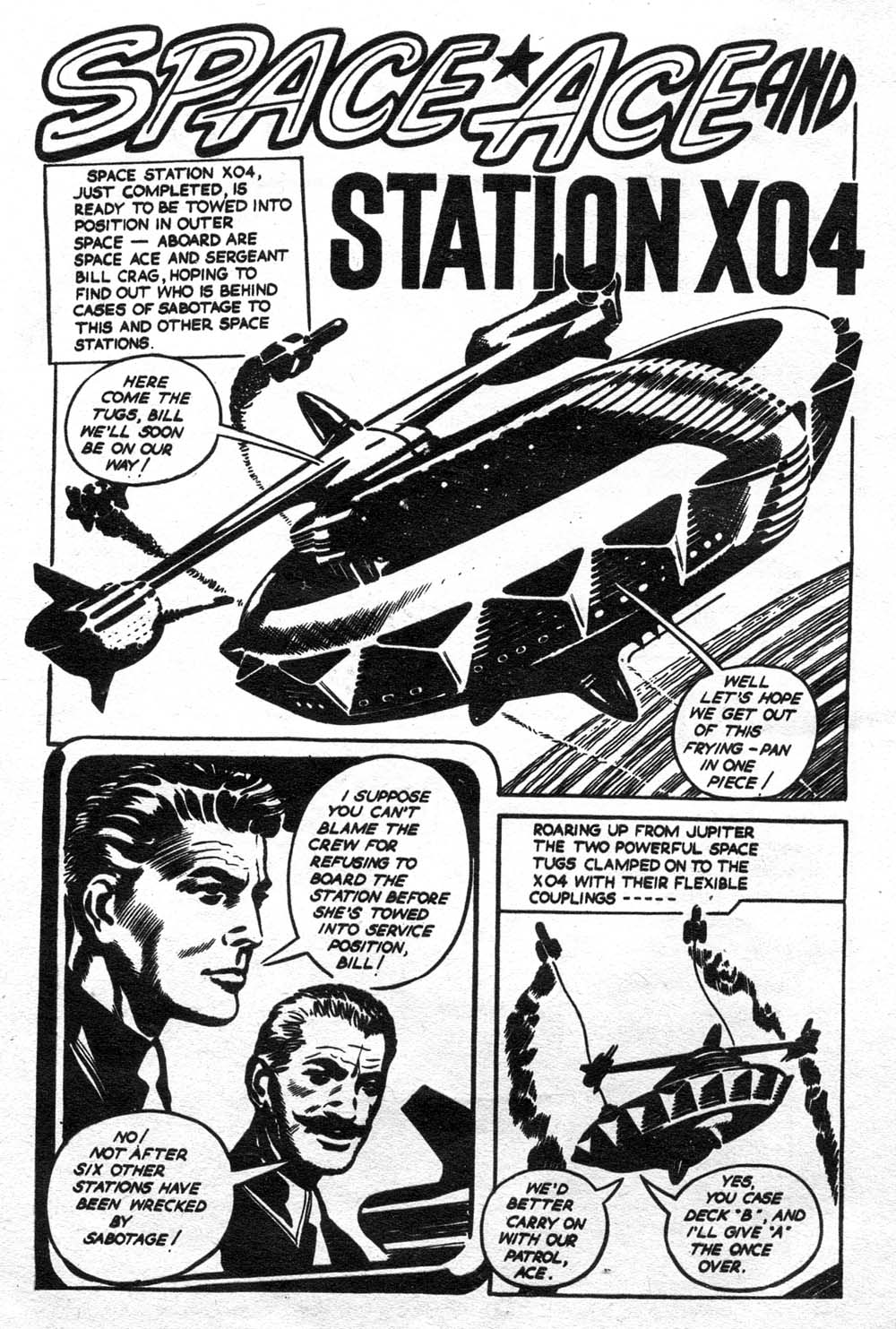
The artist on the early episodes of this Space Ace is unknown, but the series was soon written, drawn and lettered by Ron Turner3 (1922-1998), who continued on it throughout the 1950s. Atlas took over Lone Star in 1957 and added a companion comic Space Ace in 1960. This also printed Ron Turner's version initially.
Turner's Space Ace focuses on Ace Hart, sheriff of Tarrant County Texas, who is struck by a meteorite and gains immunity to radioactivity. He becomes Space Ace, Space Squadron Commander, captaining the new spaceship LS1. His crew includes the ship's inventor Professor McKay, Chief Pilot Bill Haines, physicist Dr Wang Fu, mining expert Monty Milne, and Marmaduke the Monkey. By the time the series gets its own book, the supporting cast is just Ace's NCO, Sergeant Bill Crag.4
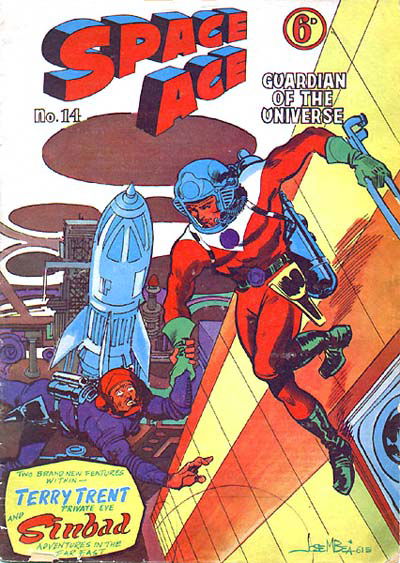
Some reports suggest Turner's series ran until 1963,5 but the last few years of Lone Star Magazine have Spanish artwork and only the early issues of Space Ace feature Turner's art. Although Beá was doing covers at least as early as issue 6 (January 1961), Turner continued working on the stories as late as issue 10 (May 1961). "The Origin of Space Ace" in Space Ace 14 (September 1961) may mark the transition.6
From this time until it ceased publication in 1963, it looks like Space Ace was almost solely Selecciones Ilustradas work. Major backup features include Terry Trent Private Eye by Emilio Bernadó7 (b. c1930) and Sinbad by Jose Lombardia and Antonio Bellalta8, with fillers by artists such as Jose Beá, Francisco Guinovart, Domingo Gómez Álvarez and Ramon Torrents.
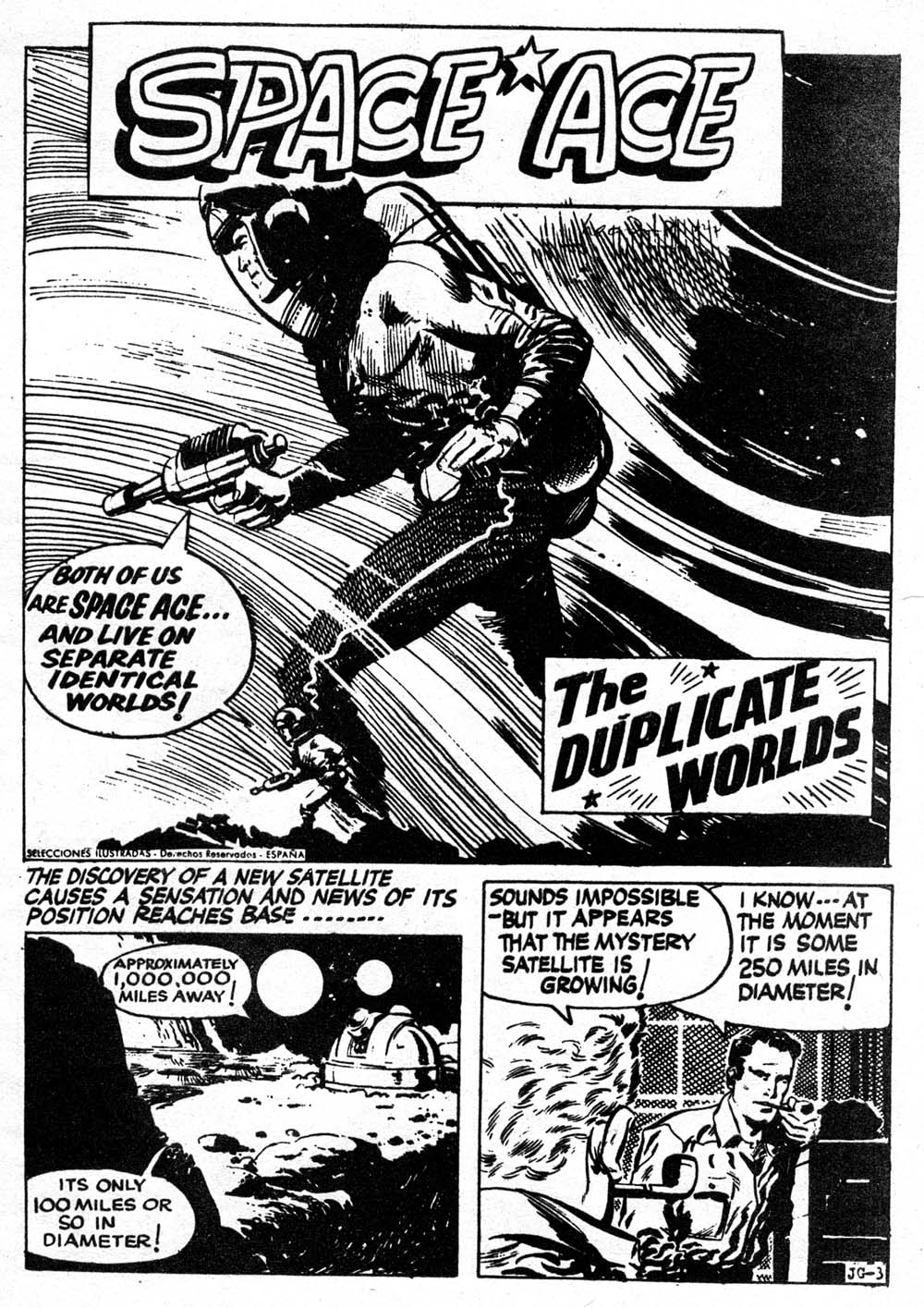
Atlas appears to have deliberately encouraged confusion between the two versions of Space Ace. The later logo explicitly mimics the one on earlier Turner stories, and the Spanish text was heavily rewritten—not just translated.9 It is possible that Atlas received promotions from SI around 1960 and decided the Agency's material was an opportunity to continue the Space Ace comic after Turner moved on.10 Atlas may have also later influenced SI to include an Earth-based support organisation and setting, reflective of the previous "Ace Hart" stories.
Surprisingly, versions of both Space Ace and Johnny Galaxia were published in the UK at the same time. Later issues of L. Miller & Son's Marvelman comics include Johnny Galaxia as a backup. The series first appeared as early as Marvelman 362 June 1962 and Young Marvelman 362 June 1962, and was included periodically until those titles ended in February 1963.