Secret origins of reprints
One obscure early Chucklers' feature, Flash the Wonder Dog, seems to be from Junior Mirror, an off-shoot from the UK Daily Mirror. It was a 16-page children's paper launched September 1954 with a mix of comics, articles and stories.
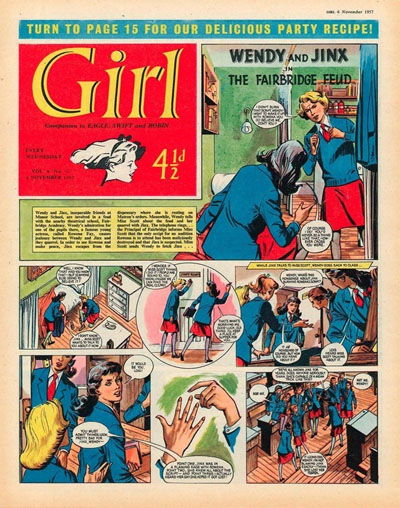
Belle of the Ballet and Wendy and Jinx are also British, but from rival publisher Hulton Press. The features were first published in Girl, a comic probably known in Australia, at least through hardcover annuals. As a regular cover feature, Wendy and Jinx in particular might have been familiar to some Chucklers' readers.
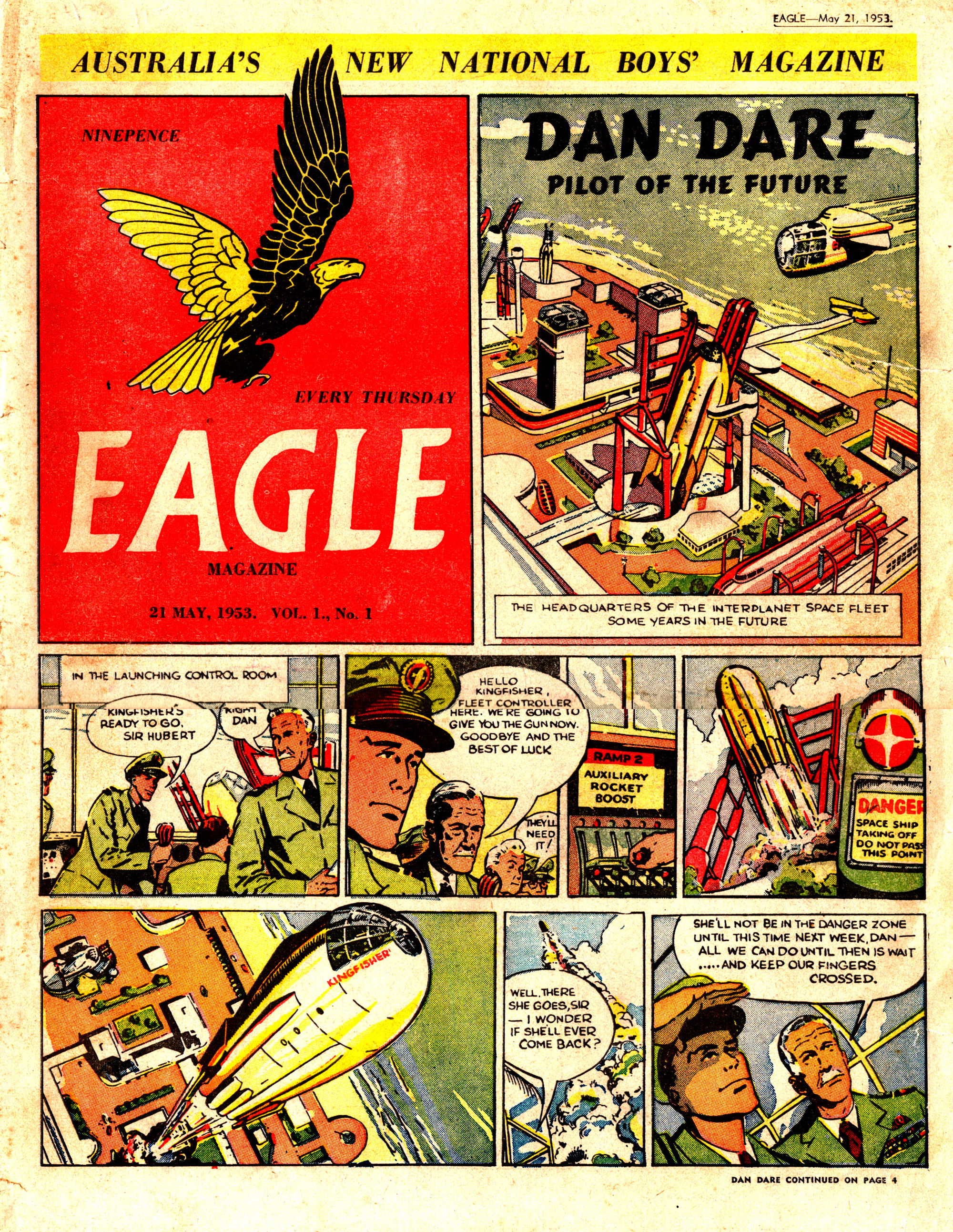
While there was no Australian Girl, a local version of Hulton's companion paper for boys, Eagle Magazine, was published by The Advertiser from 1953 to 1955.1 That's two Hulton properties published at the same time by rival news companies--Packer's ACP and Murdoch's News Limited.
There isn't evidence of a direct source for these UK comics, but Australia's Yaffa Syndicate provides a likely connection.
David Yaffa established the Yaffa Syndicate in 1921 to provide Australia with access to international news, features and photographs. By the end of the decade, the company represented multiple US newspaper syndicates, including King Features and McClure Syndicates, and London publishers such as Newnes and Odhams.2 The Yaffa group developed extensive global connections, with offices in London and New York. Consolidated Press had strategic and financial interests in the Yaffa Syndicate.3
Yaffa almost certainly sourced newspaper strips for Chucklers and had capacity to acquire comics from Hulton Press and the Mirror Group.4 However, I've not found direct evidence.5
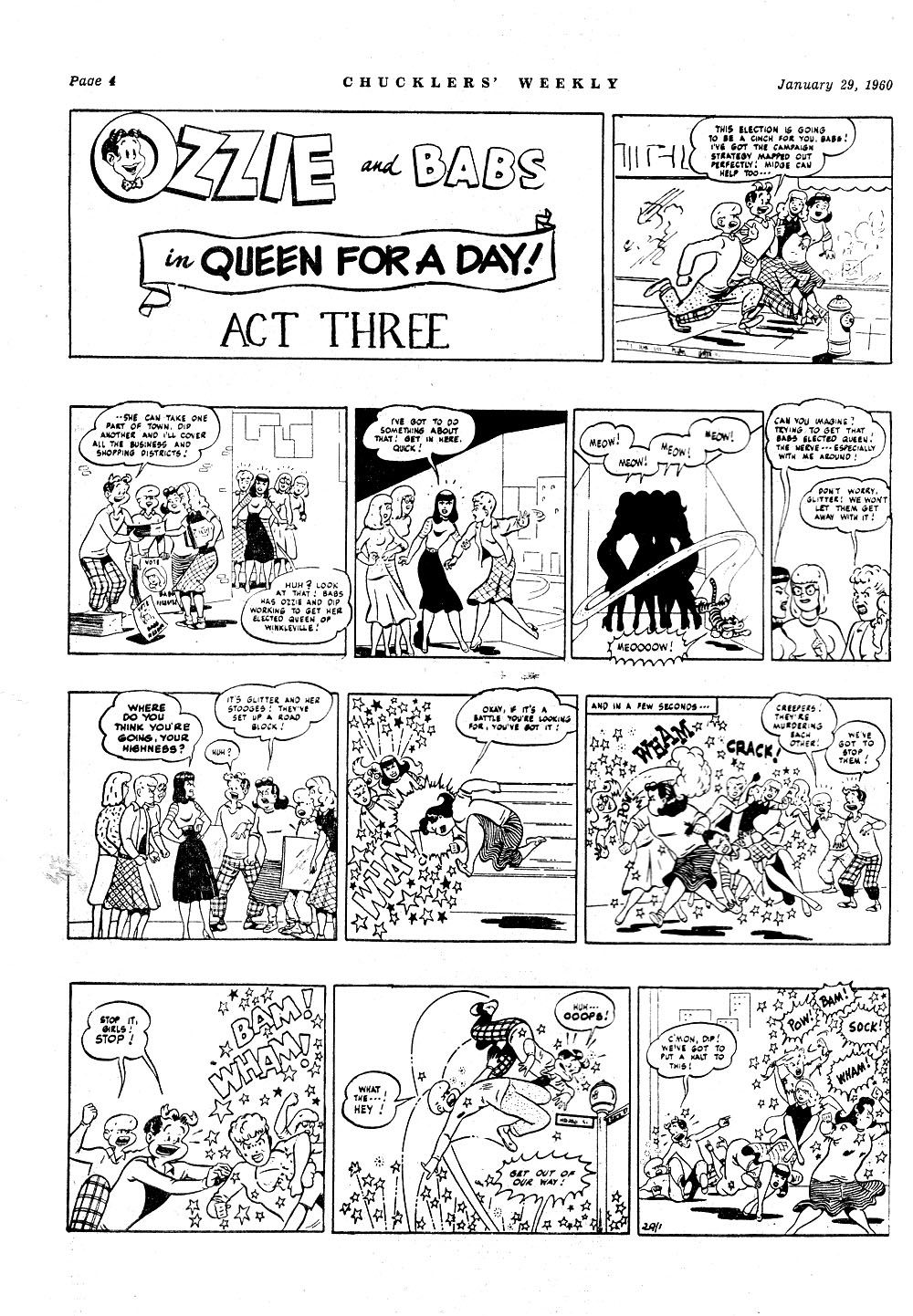
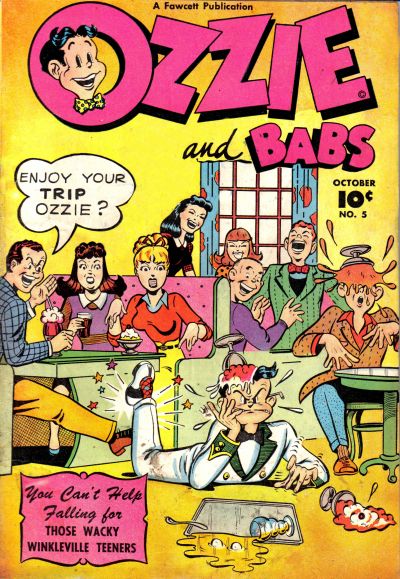
Another surprising Chucklers' feature is the 1960 serialised story from Ozzie and Babs (Fawcett, 1947 series) #13 (Fall 1949). By that time, Fawcett was no longer publishing comics and Larry S. Cleland, which reprinted Ozzie and Babs in Australia, had also exited the comics field.
It's possible that Yaffa was again involved. During the 1960s, Yaffa published a number of cancelled series from Frew and Magazine Management, and others from defunct Australian publishers, such as Atlas, Calvert and Horwitz. This included Cleland's Captain Midnight and Don Winslow of the Navy.
Sadly, nothing points to a connection with the French Dan Cooper and we may never know how the Chucklers' publishers became aware of “The Blue Triangle” and secured the reprint rights.
It could be the influence of the Yaffa Syndicate--but perhaps Molly Dye read it during a European holiday and liked it enough to get it published!