Articles
In-depth articles about the history of Australian comics and reprints.
5 August 2010
Newton
by James Zee
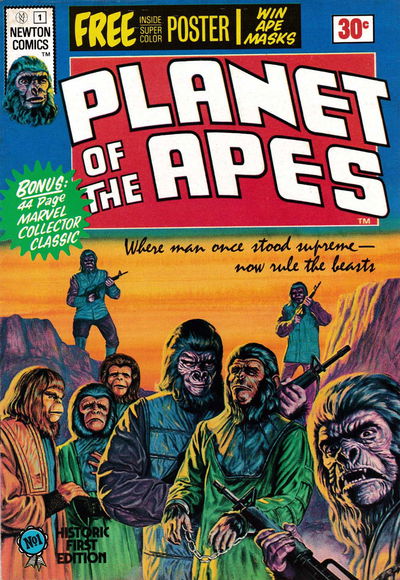
Newton Comics was a short-lived range of Marvel reprints produced in 1975 and 1976 as part of an excentric publishing empire based around Maxwell Newton's six year run on the trashy tabloid, the Melbourne Sunday Observer.
When publisher Gordon Barton abandoned his Observer in 1971, Newton quickly put out a replacement through Regal Press. The comics were part of a range of magazines and external jobs that kept the presses running throughout the week, not just the two days needed for the Sunday Observer. Other projects included teen mags such as Scream and Sweet, entertainment publications National Tattler and TV Guide, and the pornographic Pleazure, Eros and Kings Cross Whisper.
29 June 2010
Murray
by James Zee
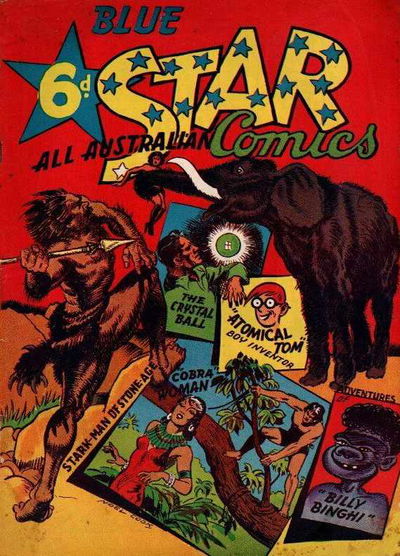
From 1946 until 1983, the K.G. Murray Publishing Company produced comics under a range of imprints—Climax Comics, Blue Star, Colour Comics, Planet Comics and finally Murray Comics.
While most of these were DC reprints, some included original Australian work and reprints from such diverse publishers as ACG, Charlton, Avalon, Novelty Press, Quality, Comic Media, Ziff-Davis, St. John, Ajax-Farrell, Fiction House and Atlas/Marvel. From the late 1960s, some series included translated comics, particularly from Spain's Selecciones Ilustradas agency.
29 June 2010
Various
by James Zee

Australian access to international comics was limited until the 1980s, resulting in a strong local comic industry, including reprint comics.
Many of the earliest and most popular Australian comics were based on reprints of newspaper strips, reflecting international trends and later providing an opportunity to circumvent import restrictions. The mid-1930s saw significant expansion of syndicated newspaper material in Australia, particularly following formation of the Yaffa Syndicate to distribute material from King Features Syndicate.
17 June 2010
Federal
by James Zee
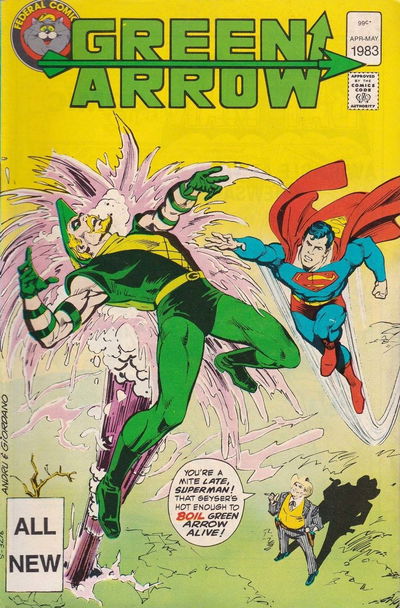
Between 1983 and 1986, the Federal Publishing Company (FPC) reprinted contemporary DC and Marvel comics, occasionally dipping into a backlist of stories acquired from the K. G. Murray Publishing Company.
FPC was a new publishing division of Hannanprint, formed through the acquisition of leisure and special interest publications from ACP Publishing, the company that acquired Murray from its founding family in 1972. Hannanprint's Eastern Suburbs Newspapers (subsequently ESN The Litho Centre) also became the printers for the comics at that time.
16 June 2010
Page/Yaffa
by James Zee
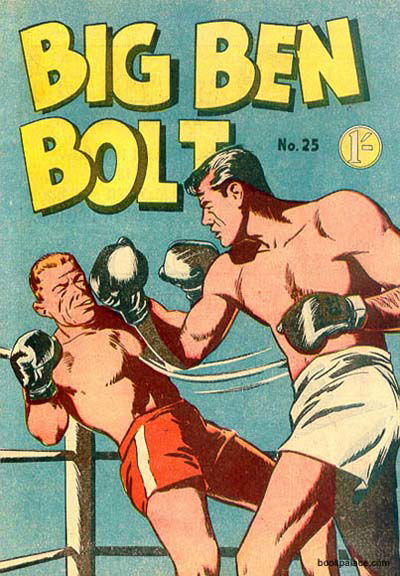
Throughout the 1960s and 1970s, the Yaffa Publishing Group produced a range of mainly reprint comics under "Yaffa" and "Page" imprints or company divisions.
David Yaffa founded his company around 1925 with the publication of Newspaper News (later AdNews), an advertising and marketing magazine. The Yaffa Syndicate's earliest comics involvement was the distribution of newspaper strips from King Features Syndicate (such as Flash Gordon, Brick Bradford and Mandrake the Magician). Page Publications, the imprint of most of Yaffa's comics, was established as a separate entity in the 1960s.
15 June 2010
Horwitz
by James Zee
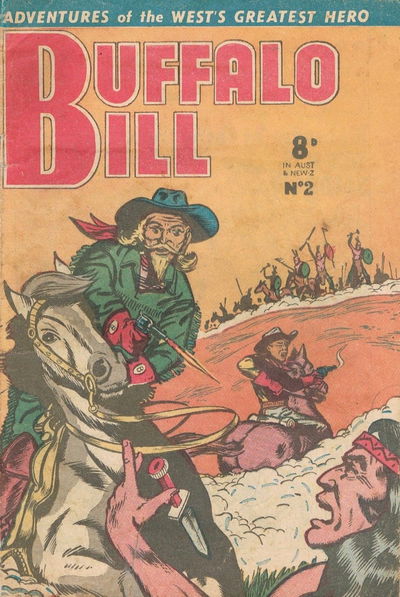
From about 1950 to 1966, Horwitz Publications was a large publisher of war, western and crime comics, including popular titles such as Navy Combat, Fast Gun, Wyatt Earp and Buffalo Bill.
Horwitz predominantly reprinted US comics, sourced mainly from Timely/Atlas/Marvel, but with other US publishers and newspaper strip reprints. In the late 1950s, it created some local comics, notably adaptations of its Carter Brown novels and The Phantom Commando, created by John Dixon but passed to Maurice Bramley (b 1910) who drew it until 1956.
14 June 2010
Gredown
by James Zee
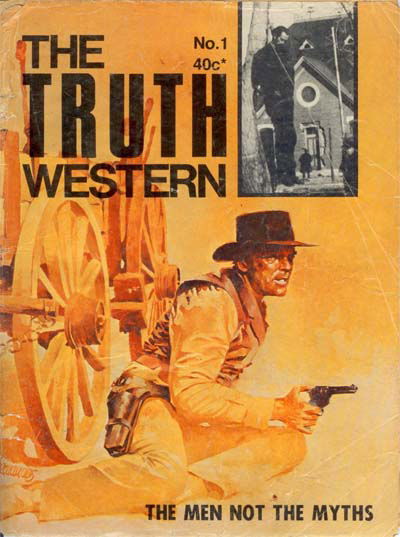
From around 1975 to 1984, Gredown published a diverse range of magazine-size comics, predominanly horror but also western, science fiction and other genres. Beginning as sequentially-numbered magazine-size series, the comics later became mainly one-shots with a wildly eccentric range of titles.
Little is know about Gredown's origins, although it seems the company was formed to compete with KG Murray. Greg Murray appears to have established Gredown after his father, Kenneth G. Murray was bought out by Australian Consolidated Press (APC) in 1974. The earliest Gredown publications were magazines, but the company's output was soon focused on reprint comics.
1 May 2010
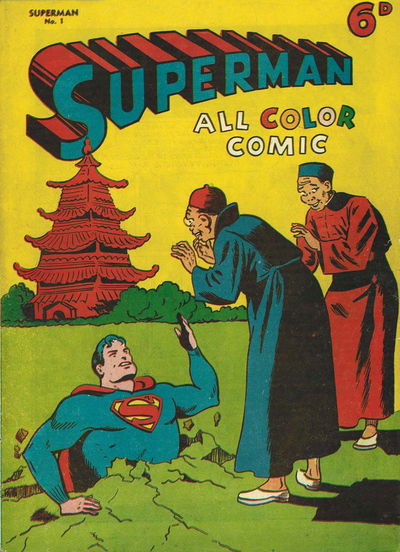
About AusReprints
by James
5 April 2010
Literacy, Deliquency and Captain Triumph
by James Zee
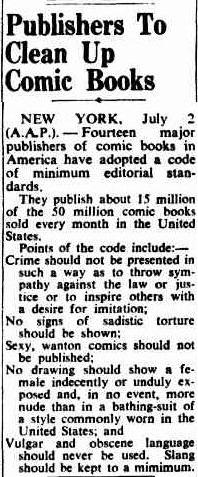
Just after Christmas 1948, during the holiday silly season when newspapers desperately seek copy to fill their pages, the Sydney Morning Herald opened up debate about the impact of comics on young people.
The final pages of this article reproduce in full the sensationalist and shallow article that may have helped crystalised popular discontent over comics corrupting Australian youth. It represents a fascinating early skirmish in the cultural tensions that erupted into overt censorship during the 1950s, particularly focused around Fredric Wertham's Seduction of the Innocent, published in 1954.
1 November 2008
Moira Bertram: Queen of the Comics
by Kevin Patrick
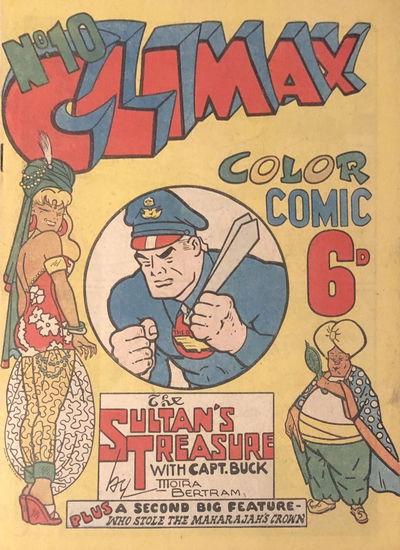
Back in late 2003, a copy of an old Australian comic dating from the mid-1940s sold for nearly AU$350 on eBay Australia.
There's nothing unusual about this in itself – the last five years or so have seen dozens of vintage Australian comics being auctioned online for similar amounts.