Experimentation and decline
![Steven Carlisle #4 ([September 1954?])](https://images.ausreprints.net/page/3110.jpg "Steven Carlisle #4 ([September 1954?])")
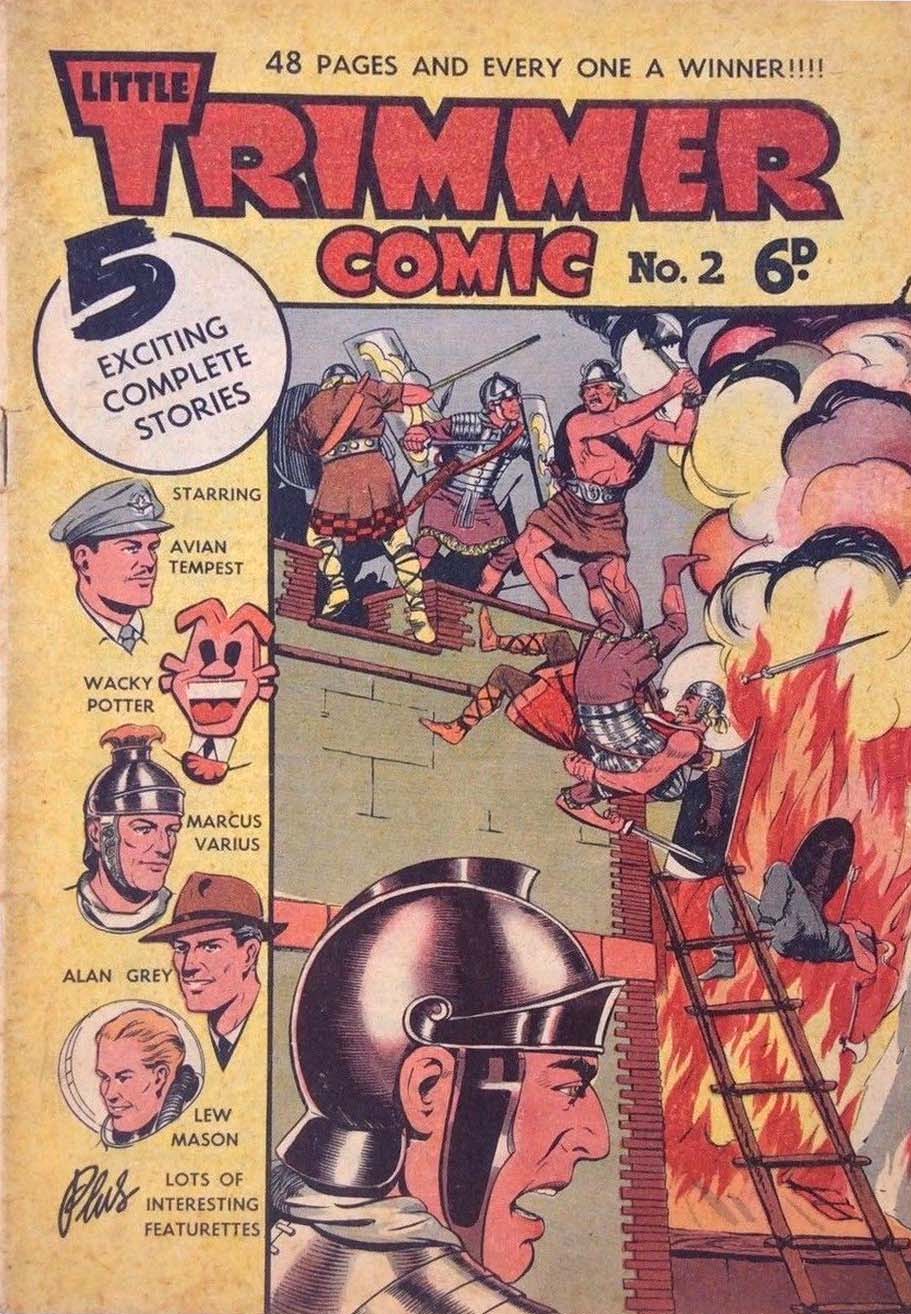
Cleland's first Australian series appears to have been Little Trimmer Comic,1 which began as a pocket size anthology with superhero, science fiction, adventure and humour—before ultimately converting to standard size, single character comic.
Over the years, Cleland's comics had the most diverse range of formats of any Australian publisher, including tabloid size, landscape, pocket and standard golden age comics—occasionally within the same series.
Later in 1954, Cleland published what was probably Australia's first adult comic, Keith Chatto's Steven Carlisle. The series pushed boundaries through provokative storytelling, semi-nudity and realistic drawings, as well as the technical innovation of half-tone colouring. Faced with fears of censorship and pressure to redraw sections of his story, Chatto and Cleland agreed to cancel the comic rather than dilute its distinctiveness.2
Through the mid-1950s, Cleland published books (predominantly non-fiction do-it-yourself manuals), magazines (men's soft porn and car publications) and a few other comic reprints from various US publishers, such as Dell (Tom Corbett Space Cadet). The association with Fawcett continued through pulp fiction reprints (such as the True Confessions Library).
![Tom Corbett Space Cadet #1 ([1954?])](https://images.ausreprints.net/page/6241.jpg "Tom Corbett Space Cadet #1 ([1954?])")
In 1954, Cleland (alongside distributor Gordon & Gotch) faced charges of import violations related to copies of Fawcett's "Gold Medal" books that were being reviewed for possible publication.3
Cleland appears to have ceased operating as a comic publisher by 1956/57, just as changes in import restrictions and the introduction of television created a massive contraction in the Australian comics' industry. However, some non-comics publishing operations probably continued into the 1960s.4
A few of Cleland's Captain Marvel, Hopalong Cassidy and Nyoka stories were later reprinted by KG Murray (mainly via DC reprints), while Page Publications (Yaffa) picked up at least one title (Don Winslow of the Navy) with continued numbering and new covers in the 1960s.